

English
How Do Wrinkles Become Deeper? The Relationship Between Facial Muscles and Skin Aging
How Do Wrinkles Become Deeper? The Relationship Between Facial Muscles and Skin Aging
2026.07.28
How Do Wrinkles Become Deeper?
The Relationship Between Facial Muscles and Skin Aging
Published | July 29, 2026 | Last Updated: July 29, 2026
Medical Reviewer | Dr. Yumin Lee at MeSOnBOM Clinic
Hello.
This is MeSOnBOM Clinic.
Facial expressions such as smiling, frowning, or raising the eyebrows cause the facial muscles to contract repeatedly throughout the day.
At first, these lines may appear only while making expressions.
Over time, however, repeated muscle movement combined with age-related skin changes may cause wrinkles to remain visible even when the face is at rest.
In this column, we will explain how wrinkles become deeper, how wrinkle Botox works, when treatment may be considered, and what to expect after the procedure.
Why Do Wrinkles Become Deeper?
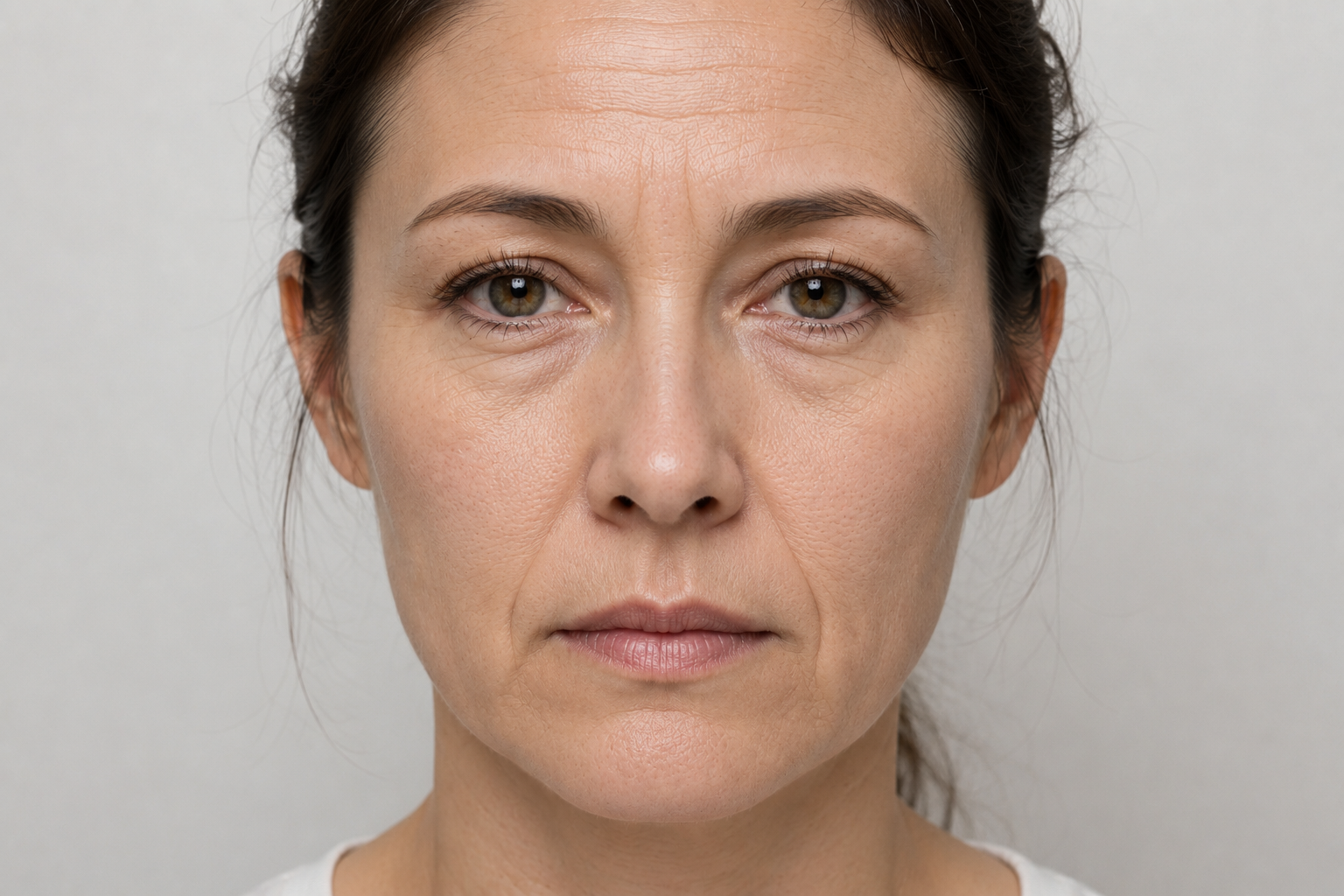
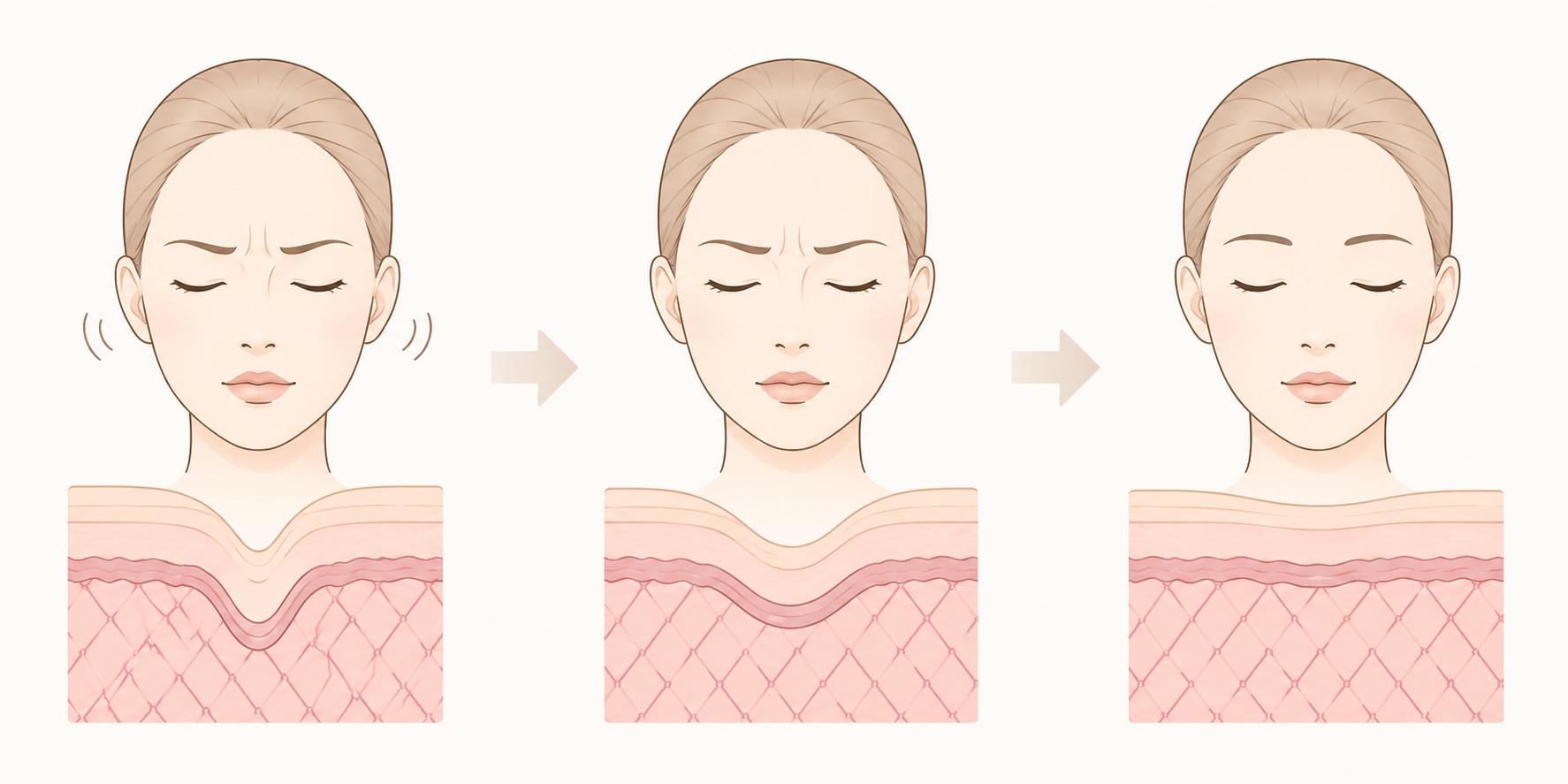
Facial expression lines develop as the facial muscles repeatedly contract and relax.
When the skin is healthy and elastic, it generally returns to its original shape after facial expressions disappear.
As collagen and elastin gradually decrease with aging, however, the skin may lose elasticity and become less able to recover after repeated folding.
As repeated facial muscle movement and skin aging occur together, dynamic wrinkles may gradually develop into static wrinkles that remain visible even when the face is relaxed.
Dynamic vs. Static Wrinkles
| Dynamic Wrinkles | Static Wrinkles |
|---|---|
| Appear only during facial expressions | Remain visible even when the face is relaxed |
| Caused primarily by repeated facial muscle movement | Develop as repeated muscle movement combines with skin aging |
| Commonly seen on the forehead, glabella, and crow's feet | May gradually become deeper over time |
| May respond well to wrinkle Botox | Additional treatments may be considered depending on skin condition |
How Does Wrinkle Botox Work?
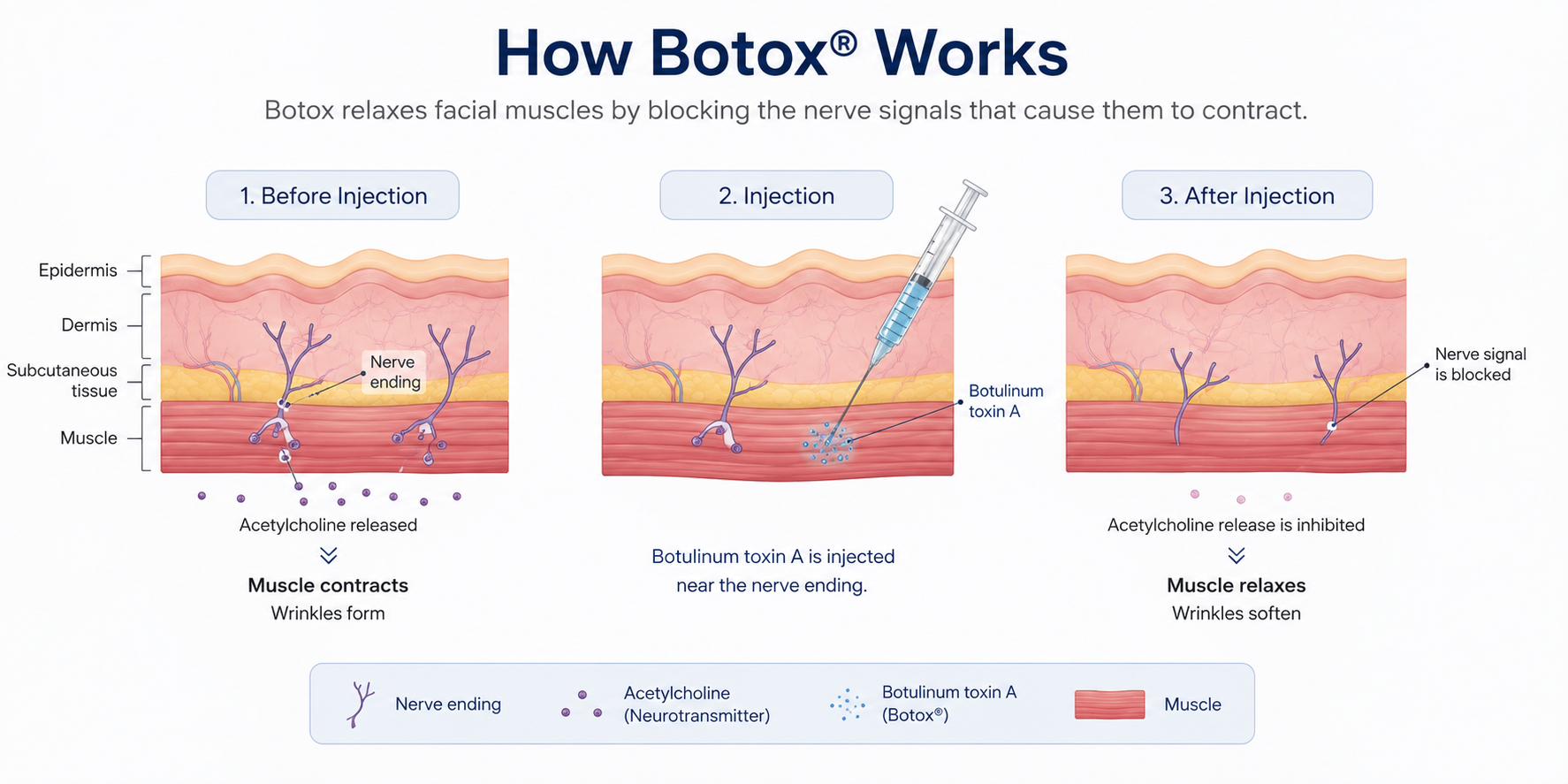
Wrinkle Botox is a treatment that uses botulinum toxin to temporarily reduce the activity of specific facial muscles responsible for expression lines.
Botulinum toxin temporarily inhibits the release of acetylcholine, a neurotransmitter involved in muscle contraction.
As muscle activity decreases, repeated folding of the skin may also be reduced, which may help soften the appearance of dynamic wrinkles.
Treatment planning should be individualized based on each patient's facial anatomy, muscle activity, facial symmetry, and skin condition.
When Should Wrinkle Botox Be Considered?
Treatment planning differs depending on the treatment area.
The forehead is closely associated with the muscles that elevate the eyebrows, while the glabellar area contains relatively strong facial muscles.
Around the eyes, where the skin is thinner and more delicate, injection depth, location, and dosage require careful planning.
For forehead Botox, treatment should be planned according to each individual's facial anatomy and muscle movement, as temporary heaviness around the eyelids may occur in some cases.
Rather than administering the same dose to every patient, physicians generally establish an individualized treatment plan after evaluating muscle strength, facial movement, and wrinkle patterns.
Frequently Asked Questions (FAQ)

Q. When will I begin to notice the effects of wrinkle Botox?
A. Although individual responses may vary, changes are commonly noticed within 3 to 7 days after treatment.
The effects generally become more apparent after approximately two weeks.
Q. How long do the effects last?
A. The duration of the effects varies among individuals, but they generally last for approximately 3 to 6 months.
The treatment area, muscle activity, and individual characteristics may all influence the duration.
Q. Can forehead Botox make my eyelids feel heavy?
A. Depending on individual muscle anatomy, injection location, and dosage, some patients may experience temporary heaviness around the eyelids.
Careful assessment of facial muscle movement and eyebrow position before treatment helps establish an appropriate treatment plan.
Q. What precautions should I take after treatment?
A. After treatment, it is generally recommended to avoid rubbing or applying excessive pressure to the treated area.
Alcohol consumption, saunas, and strenuous exercise may also be postponed for a period as advised by your physician.
Following your healthcare provider's post-treatment instructions is recommended.
Wrinkles usually develop gradually through the combined effects of repeated facial expressions and age-related skin changes rather than appearing overnight.
Understanding the underlying cause of your wrinkles and establishing an individualized treatment plan are important before proceeding with treatment.
If you are considering wrinkle Botox, consulting with a qualified medical professional can help determine an appropriate treatment approach based on your facial anatomy, muscle movement, and skin condition.

Author | Dr. Yumin Lee
Medical Institution | MeSOnBOM Clinic