

English
Rejuran: Essential Clinical Guide to Dermal Regeneration
Rejuran: Essential Clinical Guide to Dermal Regeneration
2026.07.22
Rejuran: Essential Clinical Guide to Dermal Regeneration
Published | July 22, 2026 | Last Updated: July 22, 2026
Medical Reviewer | Dr. Yumin Lee at MeSOnBOM Clinic
Hello.
This is MeSOnBOM Clinic.

As skin ages or sustains environmental damage, its intrinsic capacity for self-repair naturally declines.
This clinical guide outlines how Rejuran utilizes salmon-derived Polynucleotides (PN) to restore dermal health, based on objective anatomical facts and structured treatment guidelines.
What is Rejuran and how does it regenerate skin cells?

Rejuran is an injectable tissue-repair biostimulator containing Polynucleotides (PN) that activates dermal fibroblasts to naturally repair damaged skin architecture.
Unlike dermal fillers that physically add volume or Botox that temporarily relaxes muscle movement, PN molecules share high structural biocompatibility with human DNA, supplying essential repair materials directly to the dermal layer with minimal risk of immune rejection.
When delivered into the target tissue, PN triggers extracellular matrix (ECM) remodeling, encouraging new collagen and elastin synthesis. Rather than offering immediate artificial volume, this biological process gradually increases skin density, improves fine lines, and strengthens a compromised skin barrier over a 2 to 4-week period.
How do the 4 Rejuran formulations differ by application area?
The Rejuran product lineup consists of four distinct formulations—Healer, i, s, and HB Plus—each engineered with specific physical viscosities and active components for targeted anatomical regions.
Selecting the appropriate variant depends on individual skin thickness, tissue degradation, and the precise clinical objective.
Product | Key Components | Viscosity | Primary Indication & Target Area |
|---|---|---|---|
Rejuran Healer | PN 2% | Moderate | Full-face skin elasticity, texture refinement, and overall dermal repair |
Rejuran i | PN | Low | Fine lines and thin, delicate skin around the periocular (eye) area |
Rejuran s | PN | High | Depressed acne scars and localized tissue repair |
Rejuran HB Plus | PN + HA + Lidocaine 0.3% | Moderate | Full-face hydration and barrier recovery with reduced injection discomfort |
What is the recommended injection depth and treatment protocol?
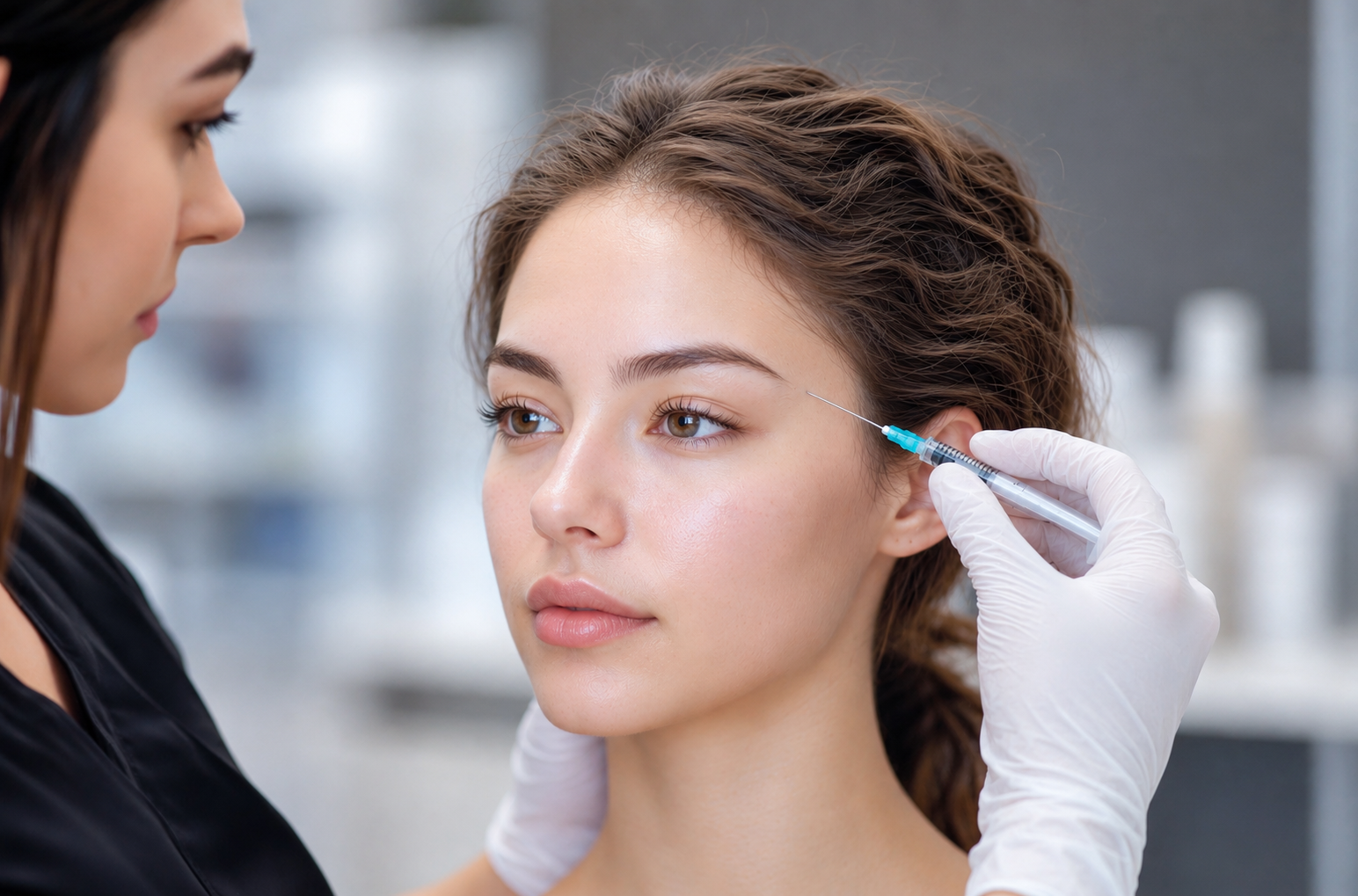
Rejuran must be injected precisely into the shallow dermis at a depth of 1.0 to 2.0 mm, following a standard protocol of 3 to 4 sessions spaced 2 to 3 weeks apart.
Because target fibroblasts reside exclusively within the shallow dermis, deeper injections into subcutaneous fat significantly diminish therapeutic efficacy.
Intradermal delivery produces temporary raised papules (embossing), mild erythema, or localized pinpoint bruising, which resolve naturally within 24 to 48 hours.
Patients can resume light facial cleansing and broad-spectrum sunscreen application starting 24 hours post-treatment.
Frequently Asked Questions (FAQ)

Q1. How does Rejuran differ from dermal fillers?
A. Dermal fillers use cross-linked hyaluronic acid to physically fill space and create structural volume, whereas Rejuran uses Polynucleotides to stimulate the skin's intrinsic cell repair mechanism without adding artificial volume.
Q2. When do the clinical improvements become visible?
A. Early enhancements in skin hydration and surface smoothness typically appear within 1 to 2 weeks, while peak collagen synthesis and elasticity improvements generally occur 4 to 6 weeks after completing the full 3 to 4 session protocol.
Q3. How long does post-treatment embossing last?
A. Temporary raised bumps (embossing) resulting from shallow intradermal injections typically absorb completely into the skin within 24 to 48 hours.
Rejuran provides an evidence-based approach to restoring skin health by rebuilding the structural dermal matrix.
Because skin thickness, degree of tissue damage, and individual aging rates vary per patient, a personalized medical consultation is necessary to establish an optimal treatment plan.
Author | Dr. Yumin Lee
Medical Institution | MeSOnBOM Clinic