

English
Laser Hair Removal Session Count? How Many Should I Get?
Laser Hair Removal Session Count? How Many Should I Get?
2026.05.29
Laser Hair Removal Session Count? How Many Should I Get?
Hello.
This is nbom Clinic.

As the number of men investing generously in self-care increases, laser hair removal has become a necessity rather than a choice.
In particular, those who are stressed by skin troubles, folliculitis, and bluish beard shadows caused by repeated shaving every morning
often heavily consider laser hair removal.
However, even when you decide to get the procedure, the 'number of sessions' is usually the biggest concern.
To answer the question, "How many sessions do I really need to get a clean look?", today we will deeply discuss the principles of laser hair
removal along with the appropriate number of sessions for male beard hair removal.
Understanding the Hair's 'Growth Cycle' Reveals the Number of Sessions Needed
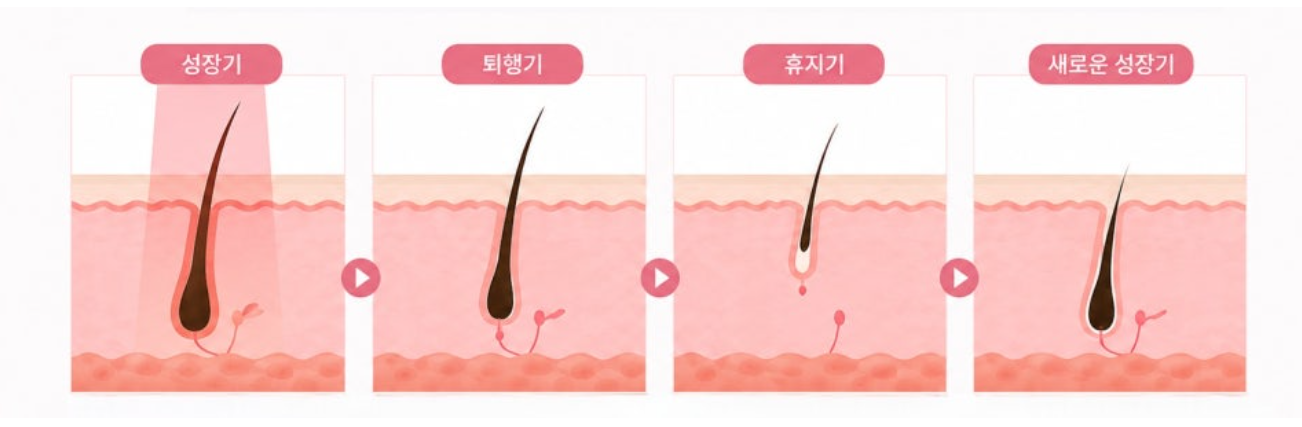
Laser hair removal is not simply a procedure of cutting or burning hair.
It works by irradiating laser energy that selectively reacts to the melanin pigment in the hair follicle; the light is then converted into hea
energy, which destroys the hair root.
The important thing here is that not all the hair on our body grows at the same time.
Hair circulates through three stages: the anagen (growth), catagen (transitional), and telogen (resting) phases.
The laser only works effectively on hair in the 'anagen' phase.
Therefore, the growing hair we see at any one time is only a fraction of the total.
This is exactly why treatment does not end with just one session, but requires repeated procedures at regular intervals.
Male Beard Hair Removal: Why is "10 Sessions or More" Emphasized?
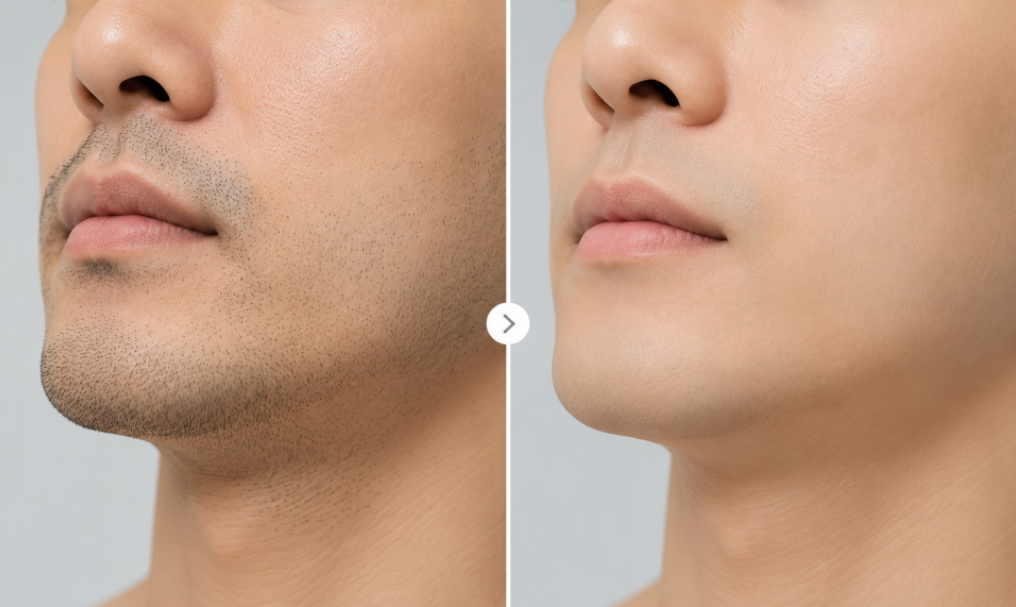
We need to look a little closer from a medical perspective at why male beard hair removal requires so many sessions.
First of all, male beards are characterized by having the deepest roots among all body hair, and the hair itself is very thick and dense.
In fact, according to research published in authoritative journals in the field of cosmetic lasers, such as the Journal of Cosmetic and Laser
Therapy, it is emphasized that for thick and highly dense male beards, significantly higher energy values and meticulously planned, repeated
sessions are essential compared to regular body hair.
Combining these medical grounds and numerous actual clinical cases, it is advisable to consider a treatment period of at least 10 sessions
or more for satisfactory results in male beard hair removal, although there are individual differences.
With a short course of just 5 sessions, it may look like the amount of hair has temporarily decreased, but this is closer to a state where growth
is temporarily suppressed rather than a complete hair removal stage.
For these reasons, we recommend meticulously setting parameters tailored to each individual's skin characteristics and planning
a sufficient number of sessions based on hair quality and regeneration speed.
The Harmony of Equipment and Expertise
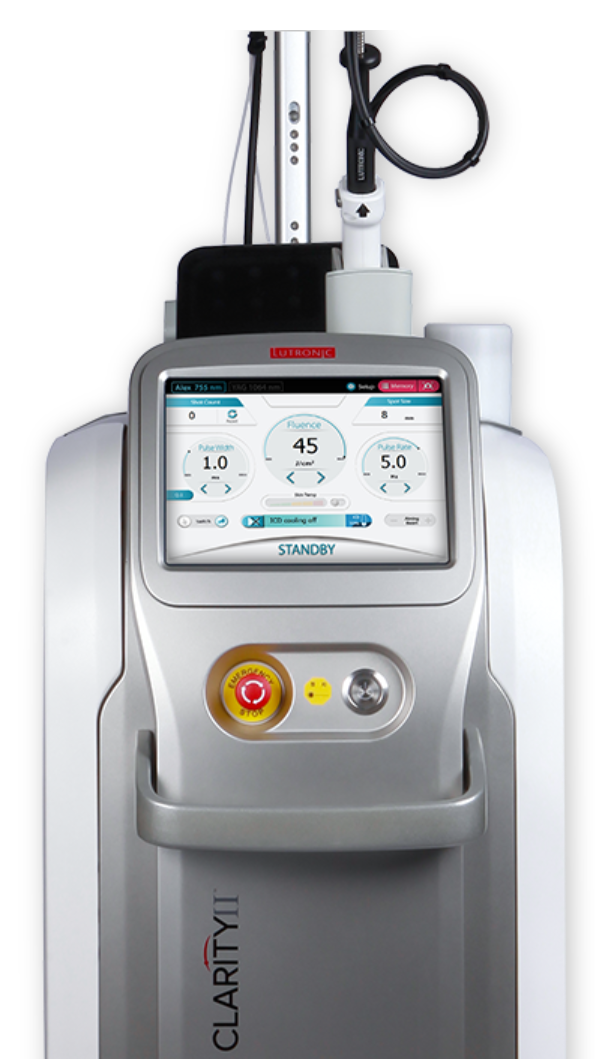
When choosing laser hair removal, you should not only consider the cost. It is crucial to know what equipment is used and how well the
medical staff understands your individual skin characteristics.
While there are various premium laser devices in the hair removal market, such as GentleMax and Apogee, procedures utilizing the Clarity 2,
which boasts consistent output and precision, are recently gaining attention.
Especially for highly difficult areas like male beards, a 'dual-wavelength procedure' that combines two wavelengths—755nm and 1064nm—
rather than using just one, determines the level of perfection.
755nm Wavelength (Alexandrite): Excellent at absorbing melanin pigment, making it advantageous for effectively destroying regular
hair and follicles in shallow areas of the skin.
1064nm Wavelength (Nd:YAG): Has the property of penetrating deep into the skin, showing an outstanding effect in targeting deep-
rooted and thick follicles like male beards.
The Clarity 2 adopts a gas spraying method, which not only speeds up the procedure but also allows for immediate monitoring of skin
temperature during the treatment.
This lowers the risk of burns and minimizes epidermal damage, allowing even men sensitive to pain to successfully complete the long
journey of 10 or more sessions with greater peace of mind.
Next, there is one more crucial key point: The laser must be irradiated meticulously.
It may sound obvious, but just because you fire the laser doesn't mean it reaches the follicles of all hairs.
Therefore, it is incredibly important to perform a thorough round-trip procedure in one session to irradiate the laser without
missing any spots, rather than a simple procedure that ends in a single minute.
Post-Care is Just as Important as the Procedure
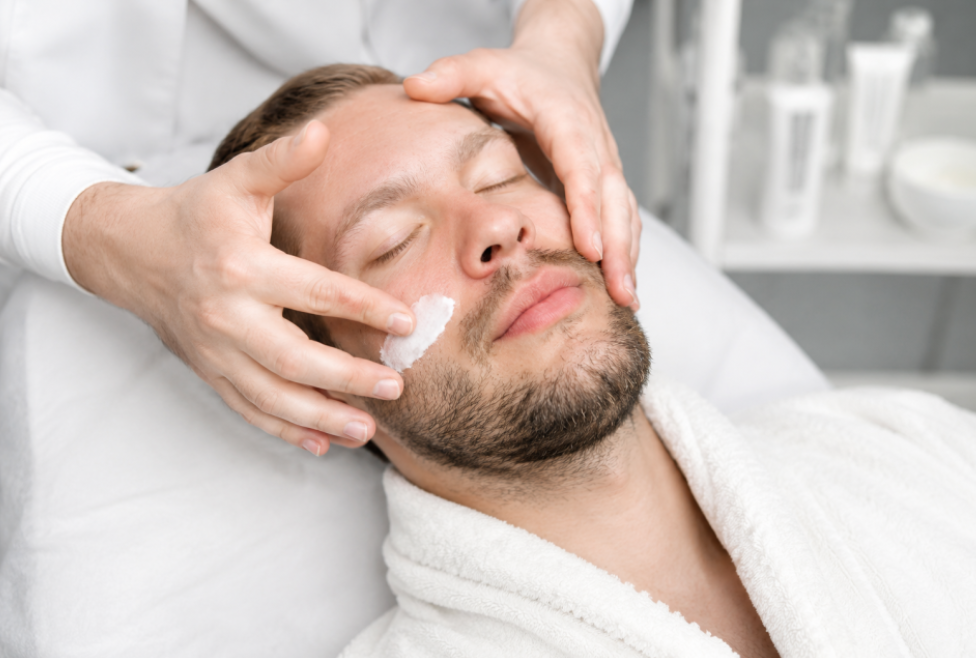
Laser hair removal temporarily stimulates the skin during the process of destroying hair follicles.
Therefore, it is best to follow the precautions we guide you through after the procedure:
Moisturizing and Soothing: You may experience redness or a burning sensation after the procedure. Please soothe your skin by
generously applying a moisturizer and regenerating cream.
Sun Protection: Exposure of the treated area to UV rays can cause hyperpigmentation. Sunscreen is essential when going out.
Caution Against Heat: For about 2 weeks after the procedure, it is recommended to avoid activities that significantly affect your
skin temperature, such as saunas, Korean jjimjilbangs, and hot baths.
No Irritation: Please refrain from forcibly plucking growing hair or using physical scrubs after the procedure, as this can trigger folliculitis.

Laser hair removal goes beyond a simple cosmetic purpose; it is a process of improving your quality of life by escaping the scars and
dermatitis caused by shaving.
Reduce the time you spend wrestling with a razor in front of the mirror every morning and complete a confident, clean impression.
A process of at least 10 sessions may sometimes feel long, but with precise and careful touches, the results will be well worth it.
If you are curious about an accurate diagnosis based on your personal hair quality and skin condition, please feel free to contact us at any time.
We will work with you to solve your skin concerns.
Thank you.